The U.S. government is proposing to allocate $30.3 million over five years toward an enhanced lie detection initiative, according to budget documents. The program, referred to as «Polygraph+» or «Polygraph Next,» aims to develop scoring algorithms powered by artificial intelligence and machine learning, alongside a technique known as «standoff sensing»—the capacity to capture physiological data without physical contact with the subject.
Budget documents, initially reported by [source], outline that the project seeks to «modernize federal polygraph and credibility assessment technologies» to boost their precision and dependability. However, this endeavor may simply represent the most recent in a series of unsuccessful efforts to employ technology for deception detection. «It’s a misguided effort to reduce the complex to something that is tangible,» remarks Kyri Kotsoglou, a legal academic at Northumbria University in the UK who researches polygraph applications within the justice system.
This development unfolds amid significant internal friction at the department. Under Defense Secretary Pete Hegseth, the Pentagon has increasingly relied on polygraph examinations in efforts to identify sources of purported media leaks. In September, the *New York Times* reported that personnel on the Joint Staff underwent polygraph testing following news stories about the depletion of U.S. weapons stockpiles in the conflict with Iran.
Polygraph+ would be overseen by the Defense Counterintelligence and Security Agency (DCSA), the body responsible for federal background investigations. Per the budget proposal, which Congress has yet to approve, the new technology would serve in vetting potential hires and «insider threat detection.» The specific technologies remain unspecified, and the DCSA did not reply to inquiries for further details.
Nevertheless, prior Pentagon initiatives might provide hints. In 2023, the department’s Defense Innovation Unit (DIU) launched an open call for companies offering products suitable for deception detection.
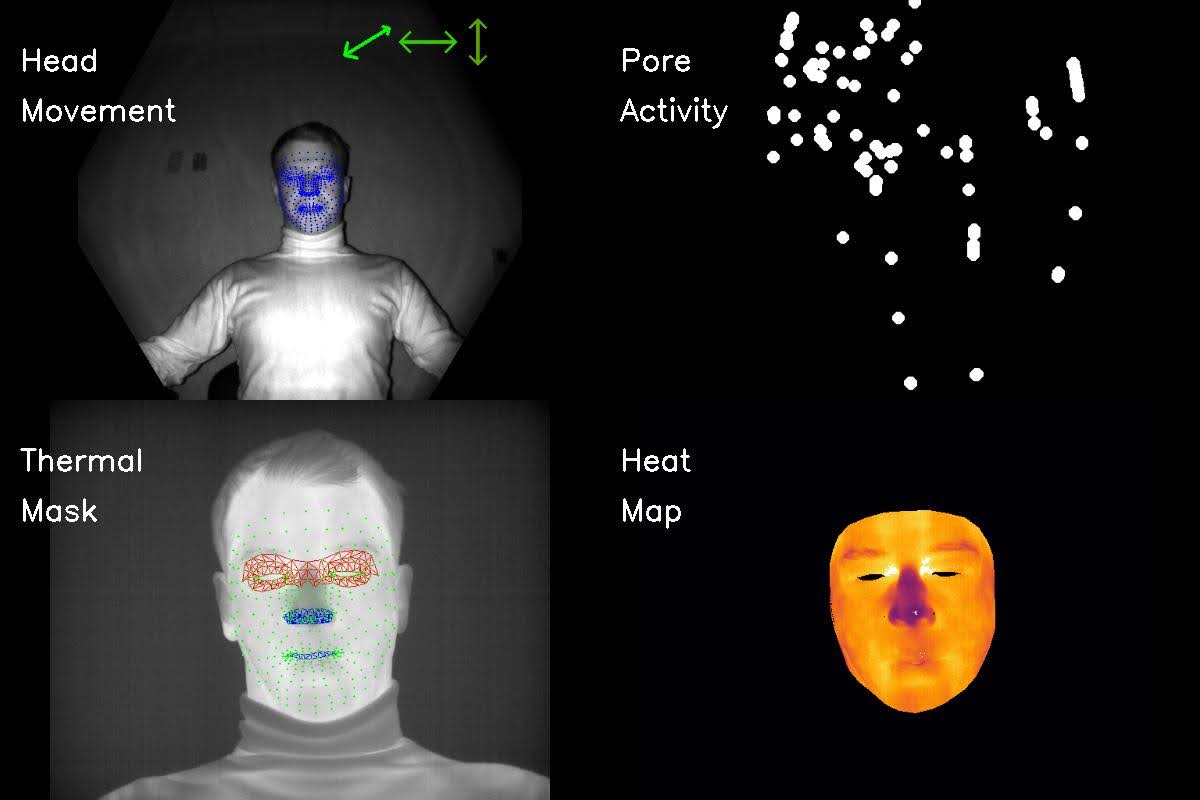
It chose two firms: Presage Technologies, which asserts it can gauge heart and breathing rates via ordinary cameras, and Altec Research, a medical sensor enterprise expanding into non-contact sensing methods. A video of Altec’s prototype technology, shared by the DIU, indicates it monitors head motion, facial skin temperature, and pore activity. Neither Presage Technologies nor Altec Research responded to requests for comment. The DIU also declined to comment.
Lie detection technology has seen minimal advancement since the polygraph’s introduction. Examiners depend on blood pressure, pulse, respiration, and perspiration readings to assess truthfulness. They evaluate the veracity of responses by comparing physiological reactions to control questions such as «Is the sky blue?» against relevant questions like «Have you ever committed a crime?»
The federal government administers tens of thousands of these tests annually during employee screening, yet the technology’s reliability has faced frequent scrutiny—and its outcomes are seldom accepted in court. In 1983, Congress’s Office of Technology Assessment concluded there was scant evidence backing the polygraph’s use in employee screening, and in 2003, the U.S. National Research Council (NRC) described the evidence for its effectiveness as «weak at best.»
Research indicates that humans can detect lies only slightly better than chance without technical aids. The American Polygraph Association claims the polygraph achieves 80% to 94% accuracy. However, the 2003 NRC report noted that even a screening test with such accuracy could produce numerous errors. With the DOD employing 2.8 million individuals, an imperfect system at that scale might wrongly accuse tens of thousands.
Additional complications exist. Polygraph interpretations are frequently subjective: [examiners may harbor biases], and individuals from minority backgrounds are more prone to being classified as deceptive. Furthermore, with training, interviewees can acquire various countermeasures to defeat the test; for instance, they might artificially amplify their physiological responses to control questions by pressing on a hidden pin in their shoe.
«If you know how it works, you can beat it,» states Sophie van der Zee, an associate professor specializing in deception studies at Erasmus University in Rotterdam. She notes the machine’s primary impact is deterrence—frequently, subjects confess before testing starts. «But that only works if people think a polygraph works,» she cautions.
A range of novel lie detection approaches has been tested over time, incorporating technologies like thermal imaging, pupil tracking, and brain scans. None have delivered dependable outcomes beyond laboratory settings. The core challenge is the absence of a universal, consistent indicator of lying across all individuals. «There is still no Pinocchio’s nose,» van der Zee observes.
AI might theoretically enhance this if it could uncover data patterns beyond examiners’ reach. AI algorithms are also better suited for «multi-modal» deception detection, which integrates multiple metrics into a composite deception «score» that is more difficult for individuals to manipulate. According to van der Zee, three underlying factors drive lie detection efforts: physiological stress, cognitive load, and deliberate attempts to hide deception. Existing polygraph technology addresses only one.
«The more you can have combined methods that approach it from these three different angles, the more successful you will be,» van der Zee explains. This idea isn’t novel—during the 2000s, researchers at Manchester Metropolitan University in the UK created a system called [name] that derived a deception score from video footage. This was subsequently integrated into iBorderCtrl, an EU-funded pilot. In the U.S., the AVATAR project merged eye tracking, voice analysis, and body movement detection into a border-crossing tool. All these initiatives have quietly disappeared.
Kotsoglou argues that merging AI with the polygraph results in «the worst of both worlds,» as it introduces uncertainty atop an invalid foundation. Even if AI or machine learning detects novel patterns in physiological data, it cannot reliably connect them to lying due to the lack of a true benchmark.
«Even if you have all the records in the world from polygraph tests, you don’t know whether those polygraph tests are right or not,» says Marion Oswald, a law professor who has co-authored with Kotsoglou on polygraph use in justice. She worries that emerging lie detection methods will, similar to the polygraph, function more as psychological crutches than scientific instruments.
«It seems very much a response to the concern of the current administration to leaks and perceived lack of loyalty,» Oswald says. «[Lie detection is] being used as a threat, to intimidate and force people to confess to things, as opposed to anything that’s actually getting valid information.